
Final Week of Horror
Lord Devereaux Needs his Final Feed
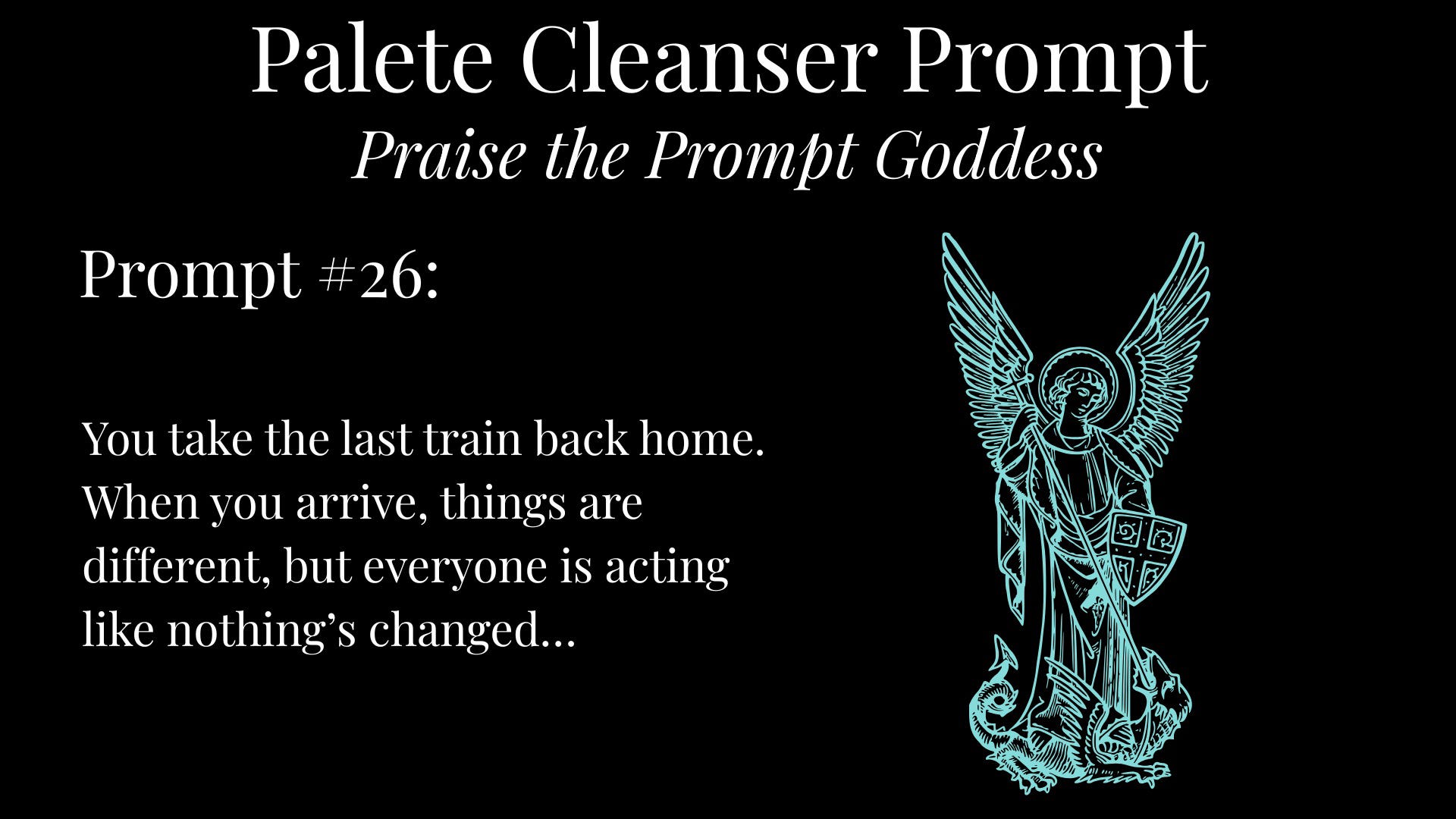
He always took the late train. Quietest that way.
No chatter, no pity, just the hum of the train on the tracks, and the dark pressing close, as if the world itself respected his silence.
But when the doors swished open at Marshwell Station, the air felt bit different. Not cold, icy and hollow. The kind of emptiness that felt vacant.
He walked the familiar road, boots whispering through the leaves. Ten years gone tonight. Ten Halloweens since the accident. Ten years since his name stopped tasting like tears and started sounding like trivia.
The houses that once greeted their grief with dignity - a candle in every window, soft ribbons on the gateposts, pumpkins carved with care had changed. Now, the whole street blinked like a slot machine. Plastic skeletons, neon bats, and some idiot’s smoke machine wheezing fake fog across the curb.
He laughed - a short, brittle sound that the wind didn’t bother carrying.
“Is this what I’ve become?” he muttered. “A bloody theme night?”
At his old house, the door was painted black instead of blue. The ribbons were gone. A stranger’s laughter was heard through the walls. He stood at the gate, unseen, unwanted, and not sure if he was angry or just tired.
Then he saw it - his daughter’s old lantern, the one shaped like a heart, hanging crooked from the porch light. Someone had kept that.
For a moment, the bitterness took hold, and something like warmth tried to surface. But the wind caught his voice when he whispered her name, and the house didn’t hear.
The Gate
He pushed the latch - stiff, rusted, and the gate gave way with a sound like something exhaling its last breath. The path was shorter than he remembered, or maybe his stride was longer now. Memory played tricks at this hour.
Light spilled through the curtains, warm, and homely. He could hear laughter, the scrape of cutlery, the pop of a cork. It sent a strange pang through his chest, the kind that makes you ache for what you never really lost.
He rapped on the door, three short knocks, the way he always did.
No answer.
He frowned, tried again, harder this time. The sound barely seemed to land, as though the air swallowed it before it reached the wood.
“Alright then,” he muttered. “Don’t get up all at once.”
The handle turned easily beneath his hand. Inside, the warmth wrapped around him, rich with the scent of roasted pumpkin and cinnamon. It hit so deep it almost brought tears home.
But the hallway looked strange. Narrower. The wallpaper a brighter colour, new photos on the wall, none of them his. Faces smiled at him, half-familiar. For a moment he thought he saw his own - but older, tucked into the corner of a crowded frame like a ghost who didn’t belong.
Voices drifted from the sitting room. He followed, shoes whispering on the wood. The laughter grew clearer, and then froze him in place.
A man stood with his arm around her. His wife. Or what was left of her smile. Grey now, but still lovely in the way autumn leaves feel fragile, fading. Around them were strangers - or friends he didn’t recognise.
And on the mantelpiece, among the decorations, a single framed photo: him. His grin wide, foolish, taken before the crash. A black ribbon draped across the corner.
“What in God’s name!”
He staggered back, his pulse pounding. Only it wasn’t. No pulse. No heartbeat. Just that empty, echoing silence where his body used to be.
The wine glass slipped from his wife’s hand and shattered.
She turned toward him eyes wide, not with fear, but with recognition.
“Tom?” she whispered.
And suddenly, everyone went still. Even the clock stopped ticking.
The Mirror Room
He stumbled backward into the hallway, every sound too loud, the creak of the floorboards, the thin whine of the wind squeezing through the keyhole, the soft clink of the wine glass shards at his feet.
“Tom?” her voice again, trembling, barely heard.
He didn’t answer. He couldn’t. There was something moving under his skin, a strange cold awareness rising from the inside out. He pressed a hand to his chest. Nothing. No beat. Just the weight of his palm against stillness.
The hallway mirror loomed ahead, tall and old, the same one his wife had insisted they keep despite its warped glass. He’d always hated it, it showed you things you didn’t quite want to see.
He reached it now, breathing hard though there was no need for air. The man staring back was pale, yes, but him. Same eyes, same worn coat, dust from the platform still on the shoulders.
But then - the mirror flickered.
For a heartbeat, if you could call it that, his reflection wasn’t there. The hallway stood empty behind the glass, the light dimmer, colder. He blinked, stepped closer. His reflection returned… but wrong.
The coat hung looser. The skin had that faint, translucent sheen of candle wax. And his eyes, God, his eyes - were the same storm-grey they’d buried him with.
He let out a sound! Half gasp! Half growl - and pressed his fingers to the mirror. The surface rippled like pond water.
From the sitting room came his wife’s voice again.
“It’s alright, Tom. It’s the tenth year. You can come home tonight.”
Something in him cracked.
“Home?” he whispered. “You moved on without me.”
But even as the anger flared, it faltered. The truth was heavier than rage. This was her way of remembering, one night each year, her candles, her grief… until even that softened into decoration and habit.
He wasn’t angry at her. He was angry at time.
He looked back into the mirror - and now he wasn’t alone.
Behind his reflection stood his daughter, ten years older, smiling softly.
“It’s okay, Dad,” she said. “It’s only for tonight.”
And the mirror stilled, his reflection gone for good. Only the empty hallway remained.
The Crossing
The house was silent again. Not the stillness of peace, the stillness of breath held too long.
He turned from the mirror and looked down the hall. His wife stood in the doorway, her face wet, eyes fixed on the space where he half-existed. His daughter hovered behind her, older now, taller, a woman grown, grief’s long echo made flesh.
“You shouldn’t be here,” his wife said softly. “Not anymore.”
He wanted to answer, to tell her he didn’t understand, that he’d only taken the last train home. He hadn’t meant to startle anyone. He’d just wanted to see them, one last time.
“I never left,” he said instead. “I’ve been right here.”
But even as he spoke, he saw how wrong that was. The hallway, the scent, the pictures all new, all foreign. His world had kept turning without him, and he’d been chasing its shadow.
From outside came the faint, mournful whistle of a train. The sound threaded through the house like memory returning to claim what it had lent.
His daughter stepped forward.
“It’s time, Dad.”
“Where does it go?”
She smiled sadly.
“Where it always does. Back to the start.”
The air grew colder. The light began to fade, not darknes;, not quite, just a thinning of everything that tethered him here. He glanced once more at his wife.
“You’ll forget me,” he said.
“No,” she whispered. “We already remembered you longer than we were supposed to.”
He laughed, a soft, wry sound, the way he always had when words failed him.
“Figures,” he said. “You always were the brave one.”
She reached for him, but her hand passed through like mist.
The train whistle sounded again, closer now, echoing through walls and bone and memory alike.
He stepped back toward the open door. The night air met him, cool, forgiving. The village was quiet again, the decorations dim, the last of the fake fog drifting away.
Down the lane, the tracks glimmered faintly beneath the moonlight. A single carriage waited, its windows warm, its doors open.
He took one last look at the house, the life, the love that had been his.
“Guess I missed my stop,” he murmured.
And then he boarded.
The door shut without a sound. The train eased forward, slow and certain, until both man and memory were gone - just the faint echo of wheels fading into the dawn.
Afterword
Sometimes, what we call haunting is just love - too stubborn to leave, too tender to be forgotten.
And sometimes, the dead aren’t searching for vengeance… they’re just looking for home.
⁛
Thank you for reading. If this story left a thread of thought flowing, know that your readership is the most valuable currency a writer can have. I am grateful that you came to spend time here. If you would like to officially join this growing community please subscribe. You can invest in this ongoing creative pen by becoming a paid subscriber. Let’s keep building this world together.
Brilliant Brenda. ❤️
This is heartbreaking and beautiful, Brenda!